
A useful note helps the next person understand the care. It records what happened, what the clinician learned, and what comes next. AI can help draft that note. The goal is to spend less time on paperwork while keeping the record clear and true to the visit.
The best test is the whole job: capture the right facts, review the draft, fix it, and finish the note. A fast first draft is helpful only if the final note is accurate and the total work is easier.
Clear notes. Thoughtful review.

Know what the tool does
Some tools organize points the clinician enters after a visit. Others turn speech into text. An ambient AI scribe listens during a visit and uses that content to draft a note. “Ambient” means it works in the background. Tools differ in whether they keep audio, save a transcript, or send data to other services.
A transcript is a written version of speech. A note is a summary shaped for a care record. Moving from one to the other can change meaning. The clinician needs to check what the draft includes, leaves out, and adds.
Do not treat every AI writing tool as a note tool. A personal chatbot may have different contracts and settings from a work service approved for client data.
What helpful use can look like
A tool may help sort approved visit details into a note format. It may reduce repeat typing or help a clinician finish a draft before leaving work. That could free attention for the client and reduce after-hours paperwork.
There is early research on these goals, but results differ. A randomized trial assigned 238 outpatient physicians to two AI scribe tools or usual care. One tool modestly reduced time spent in notes compared with the control; the other did not show a statistically significant reduction on that measure. Both groups using AI reported some gains in well-being. Read the original study.
This was a short study of physicians across specialties, not proof that a therapy practice will get the same results. It tested named commercial tools. It does not establish better patient–therapist relationships or better treatment outcomes. Use research to plan a local test, not to promise savings.
Approve the data use first
Before a real visit is recorded or entered, the team must review the exact service and task. Include the account, contract, settings, storage, access, and linked systems. Review audio, transcripts, draft notes, and logs, not just the final note.
For HIPAA-covered uses, HHS explains that cloud services handling electronic protected health data on behalf of a covered organization need a business associate agreement and other safeguards. A business associate agreement, or BAA, sets duties for handling that data. It does not finish the review by itself. HHS cloud guidance.
Have privacy and legal reviewers check special record rules and state recording laws. Set the notice and consent process before use. For more detail, read Can I Put Client Information Into an AI Tool? and use the existing data-handling worksheet.
Keep the client relationship central
Explain the tool in plain words: what it does, what information it uses, and who checks the note. Do not call it “just typing” if it records the visit or sends information to a service.
A client may feel comfortable with one use and uneasy about another. Have a clear way to handle questions and choices under the rules that apply. Keep a way to document the visit without the tool when needed.
Check how use affects the visit. Does the clinician listen more closely? Does the device distract either person? Invite feedback without pushing the client to approve. A tool should support trust, not make the person feel watched or rushed.
Review facts and meaning
AI can write false content with confidence. NIST calls this confabulation; it is often called an AI hallucination. A tool can also miss a key point or assign one person’s words to another. NIST Generative AI Profile.
Consider a made-up visit. A client says, “I felt down for two days after an argument.” The draft says, “Client has major depression.” That adds a diagnosis the statement does not establish. A true note keeps the report separate from the clinician’s assessment.
Another draft says a safety screen was negative, even though the source says nothing about a screen. Missing information is not a negative finding. Resolve gaps through the proper care process; do not let the tool fill them with guesses.
These are teaching examples, not real cases or instructions for treating a person.
Give review a clear place in the process
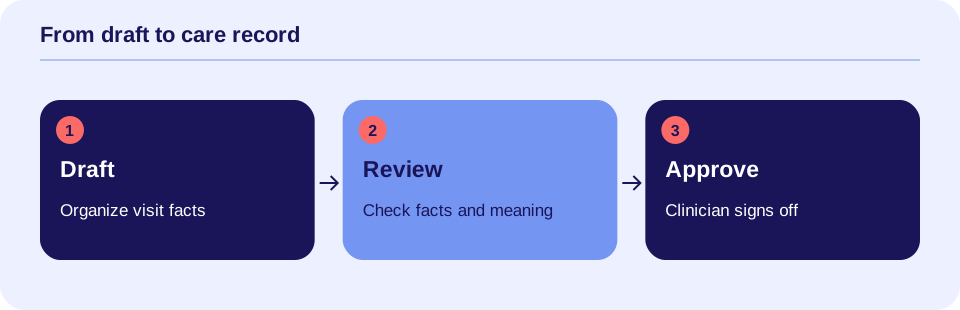
The clinician who knows the visit needs time to check the draft before approval. A suggested review sequence is:
- Match the visit. Check people, dates, events, symptoms, services, and actions. Confirm who said each point.
- Keep evidence clear. Distinguish client reports, observations, and clinical judgment. Remove facts the tool added without support.
- Check the plan. Confirm follow-up, referrals, and next steps. Make sure nothing important was left out.
- Read for respect. Keep language accurate and fair. Preserve the client’s meaning and relevant context.
- Finish through the normal process. Edit, approve, and sign as required by your team. Keep the final record in the right system.
This is a proposed work process, not a validated clinical checklist or a full list of legal duties. Adapt it to your setting and standards.
Do not count a quick glance as review. If staff cannot see the source details or have no time to check, change the process before expanding use.
Keep billing tied to actual care
A clearer note may help billing staff find required details. AI can also flag blanks for a person to review. It should not add a service that did not happen or change a clinical fact to fit a code.
Keep note review and billing review distinct. Clinical staff confirm what happened and the assessment. Billing staff check the applicable payer and coding rules. Track actual claim errors and rework; do not assume a longer note means a better claim.
Make room for a calmer workday.

Test the full job
Start with approved made-up cases. Include different speakers, unclear phrases, missing details, and facts that should not become diagnoses. Train reviewers to find known errors. Then move to a limited real-use trial only after the needed approvals.
Name the trial owner and reviewers. Compare similar work with the usual process. Count drafting, editing, and review time. Track missing or added facts, unfinished notes, after-hours work, and staff feedback. Include client feedback where use affects the visit.
Set the conditions for pausing in advance. Repeated unsupported findings, missed key details, or data use outside approval should trigger review. These are proposed trial steps, not evidence that a small pilot proves safety in every setting.
Include fees, setup, training, and review time when measuring cost. Time saved may go toward better care or lighter workloads rather than cash savings. State which result the team wants.
Plan for changes and errors
Keep a backup way to write notes during an outage or pause. Teach staff how to report an error and who can stop use. Recheck the tool when its model, settings, links, or tasks change.
If a faulty draft has already entered a final record, follow the normal correction and reporting process. Do not silently rewrite a signed record. Assess where the information went and whether other action is needed.
Leaders should make the approved task easy to find. The rule should name allowed data, the reviewer, the approval step, and the review date. The 25-question purchasing checklist helps teams request proof before buying.
Choose help that earns its place
The aim is a better workday and a better care record. Let the tool help with a draft while trained people keep control of the final note. Measure the whole task and listen to staff and clients.
Keep the uses that improve the work. Change or pause those that add confusion. Less busywork matters when it leaves more room for careful, human care.
When a tool uses more than text
Multimodal AI can work with text, audio, or images. A visit recorder may confuse speakers or miss a quiet statement. Check the transcript against what happened before reviewing the draft note. Do not accept an inferred emotion or diagnosis just because the tool added it. Explain recording and data use through the process your setting requires.
Also check for algorithmic bias: patterns that can produce unfair results. For example, a draft may turn a missed visit into a claim that someone does not want help. Preserve the known facts and the client’s account. Test different language needs and life situations before wider use.
AI-literacy additions reviewed October 11, 2026. See AI Terms for Care Teams for the related terms and examples.
Discuss consent for documentation
The AI Scribe Patient Consent template helps record the tool, data practices, and patient’s choice. Adapt it to your practice before use and discuss it with the patient.
Sources and scope
Sources checked October 4, 2026. This article is for learning and planning, not clinical, legal, coding, or security advice. Examples and trial steps are proposed practice ideas. Benefits depend on the tool, task, review, and setting.
- Ambient AI Scribes in Clinical Practice: A Randomized Trial. Original research in NEJM AI; 238 outpatient physicians, two commercial tools, and a usual-care control. Its findings do not establish results for every behavioral health setting.
- HHS: Guidance on HIPAA & Cloud Computing. Explains covered cloud uses, BAAs, and safeguards.
- NIST: Generative Artificial Intelligence Profile, AI 600-1, July 2024. Voluntary guidance on content errors, testing, and review. It is not a product certification.